What a messenger bag is meant to do
A messenger bag is one of those carry items that looks simple until you actually rely on it every day. For engineers, field staff, office buyers, and sourcing teams, the question is rarely whether a messenger bag looks good on a desk. It is whether the bag can move documents, a laptop, chargers, notebooks, and a few hard-to-organize items without collapsing, rubbing through at the corners, or turning awkward on the shoulder. That is where the design details matter.
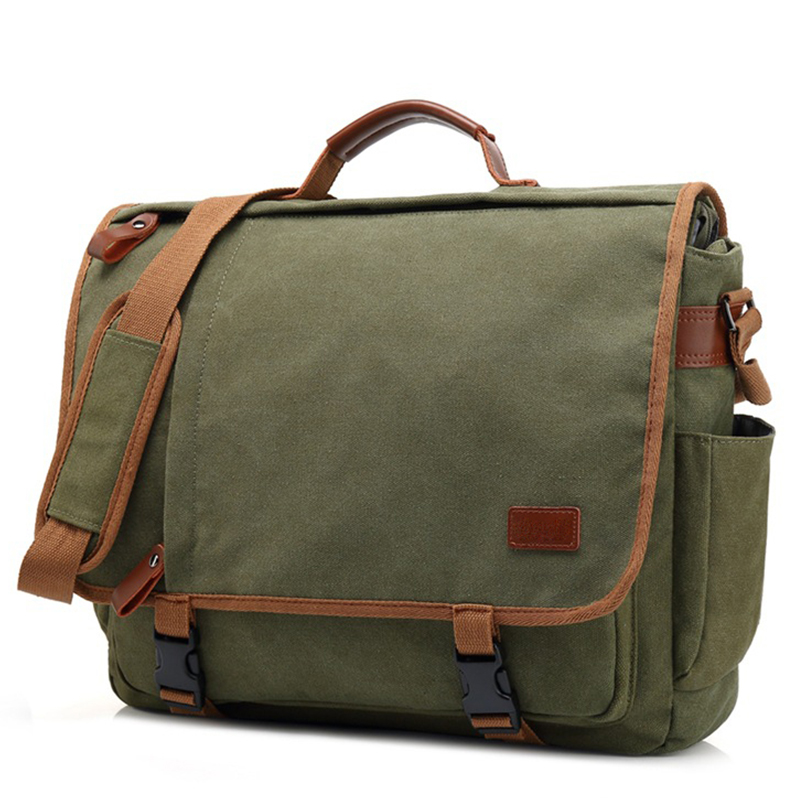
The messenger bag format usually combines a flap-over body, crossbody strap, and a top grab handle. In the product described here, the shape is rectangular and soft-sided, with a large front flap, external side pockets, and buckle-style front closures. That combination points to a utility-first bag rather than a fashion-only carry piece. It is the sort of build people choose for commuting, school, business travel, or fieldwork when they want faster access than a backpack and more coverage than an open tote.
Quick read: what buyers usually need to decide
When sourcing a messenger bag, the practical decision is not “bag or no bag.” It is which version fits the user’s day. A laptop messenger bag usually needs better structure and safer closure points. A canvas messenger bag may suit casual or utility use, while a leather messenger bag leans more formal and often carries a higher image value. A travel messenger bag should emphasize access, strap comfort, and exterior organization. A business messenger bag needs a cleaner profile and enough polish to sit beside office wear. A casual messenger bag can be looser in style, but it still has to survive daily handling.
The bag style described here sits between utility and office carry. The woven fabric body, tan webbing strap, brown reinforcement tabs, and black plastic buckle hardware give it a work-ready look. It is not trying to disappear. That can be a strength, especially when the buyer wants a carry item that feels durable and easy to identify in a shared office or classroom.
Construction details that matter in daily use
From a manufacturing perspective, this is a cut-and-sew textile bag assembly with webbing, stitched seams, reinforcement patches, and plastic hardware. That sounds ordinary, but ordinary is where a lot of failure points hide. The flap edge binding, shoulder strap attachment points, and bottom corners take repeated stress. If those areas are underbuilt, the bag may still look fine on day one and start sagging or fraying after regular commuting.
The visible top handle is worth noting. Many users ignore the handle until they are rushing through a station, moving between meeting rooms, or lifting the bag into an overhead compartment. A reinforced handle gives the bag a second mode of carry and makes it easier to manage when the shoulder strap is inconvenient. That is a small design choice with outsized usefulness.
The external side pocket(s) also deserve attention. They are not just extra storage. They let the user separate items that should not be buried in the main compartment, such as a water bottle, cable set, transit pass, or notebook. For sourcing teams, side pockets often signal a more practical bag spec, though they can also add stitching complexity and more seam stress if the pattern is not clean.
Material choices: why the surface finish changes the use case
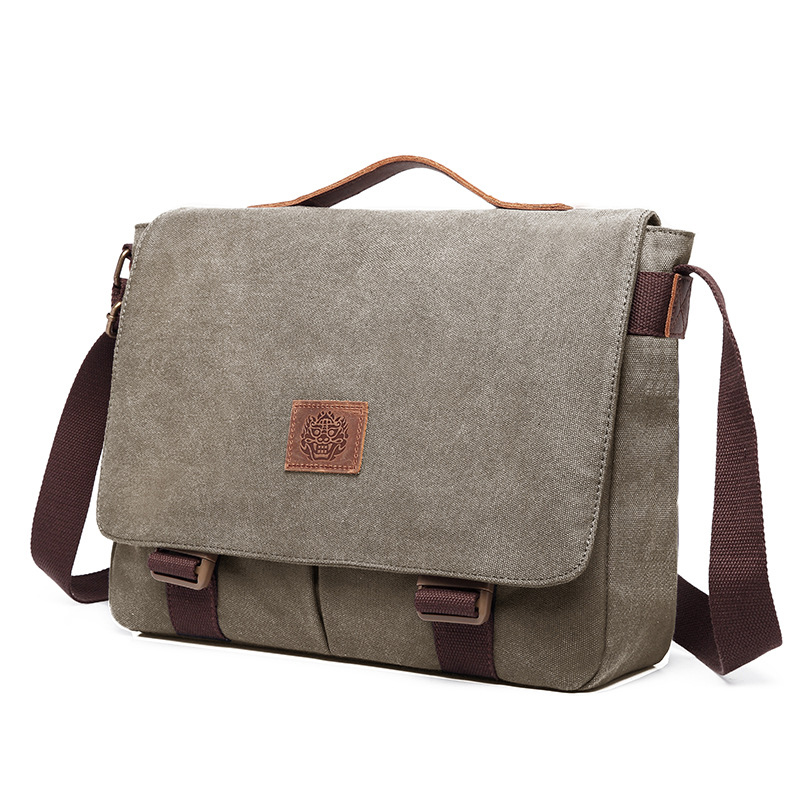
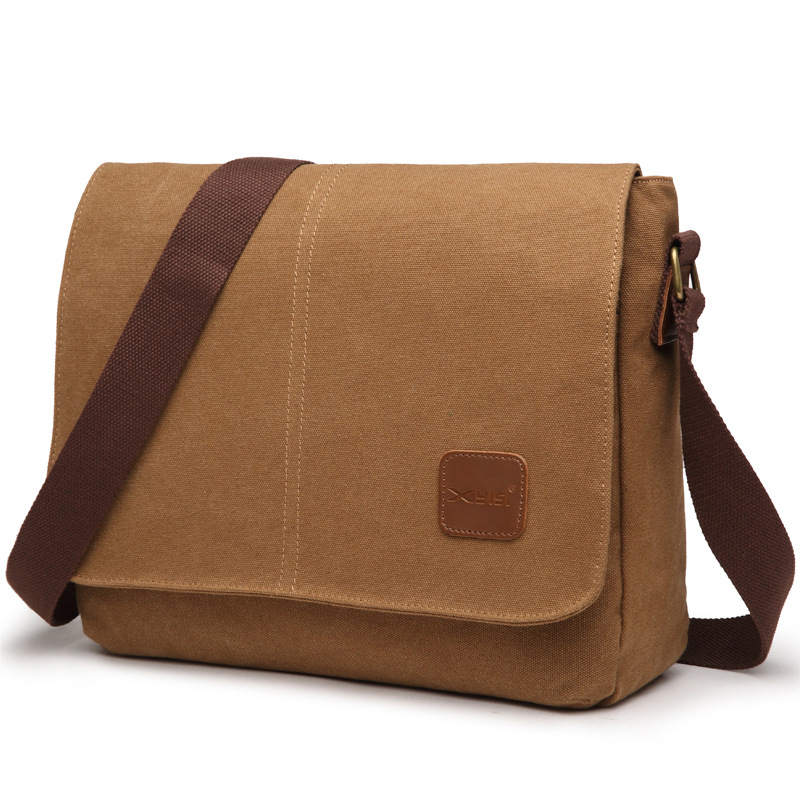
The bag described uses a woven fabric or canvas-like body with a matte texture, plus brown faux-leather or leather-like trim. That combination is common for utility bags because it balances stiffness, weight, and visual structure. Canvas-style shells often feel more casual and rugged. Leather or leather-like trim can help protect edges and improve perceived quality, though the buyer should be careful not to assume genuine leather unless the supplier states it clearly.
For a laptop messenger bag, material choice influences more than appearance. It affects how the bag holds its shape, how easily it scratches, and how well it handles daily handling in trains, offices, classrooms, and vehicles. A soft-sided bag can be comfortable and lighter, but if the shell is too floppy, documents bend and devices shift around. A more structured front panel often improves the carry experience, even when exact padding is not publicly verifiable.
Choosing the right version for the job
For office and commuting use
A business messenger bag should close securely, present cleanly, and carry flat against the body. This style works when the user wants one bag that can move from desk to train to meeting room. The flap closure helps cover the contents, while the crossbody strap keeps weight distributed better than a one-sided shoulder bag alone.
For school or casual everyday carry
A casual messenger bag can be a bit more forgiving. The user may prioritize quick access, roomy pockets, and a durable shell over a formal finish. The canvas-style body and visible hardware fit that need well.
For travel and fieldwork
A travel messenger bag should be checked for strap comfort and front access. If the bag will be carried for long periods, buyers should look closely at the strap attachment points and the adjuster hardware. A bag can be visually sturdy but still feel awkward if the strap slips or the load pulls the flap off-center.
Common buyer mistakes
The biggest mistake is treating all messenger bags as interchangeable. They are not. A buyer can get trapped by a nice exterior and overlook the real questions: Does the bag carry the user’s core items comfortably? Does the closure keep contents secure? Will the material age well under daily use? Is the carry system flexible enough for hand carry and shoulder carry?
Another common miss is overestimating what the photo tells you. In this case, the visible side pockets, flap, handle, and buckle closures are clear. But exact laptop compatibility, internal organization, padding level, water resistance, and lining are not confirmed. That matters. A bag may look like a laptop messenger bag while still being better suited to documents and accessories than a rigid computer case.
Practical sourcing advice
If you are evaluating this kind of messenger bag for procurement, ask for construction details rather than relying on style images. Request confirmation on shell material, trim material, strap removability, internal pocket layout, and any padding claims. If the bag is intended for corporate gifting or retail, also consider how the flap closure behaves when the bag is full. A stiff-looking bag that is annoying to open will create customer complaints later.
For spec comparison, separate the visible features from the verifiable ones. Visible features here include the top handle, adjustable shoulder strap, flap closure, buckle hardware, and side pockets. Verifiable performance claims should be backed by samples, not assumptions. That is a simple rule, but it prevents a lot of disappointing purchases.
A short FAQ for buyers
Is a messenger bag good for laptops?
Sometimes, yes, but only if the size, internal support, and compartment layout match the device. Do not assume fit from the exterior shape alone.
Is canvas better than leather?
Not always. Canvas can be lighter and more casual. Leather can feel more formal. The better choice depends on user environment, durability expectations, and budget.
What makes this style useful?
The mix of flap coverage, shoulder carry, top handle, and external pockets makes it adaptable. That is useful in real work settings where the bag is picked up, set down, opened, and worn all day.
Next step
If you are sourcing a messenger bag for commuting, office carry, school, or travel, start with function rather than aesthetics. Confirm the dimensions, structure, material specification, and internal organization before you commit. The right bag is the one that stays useful after the first month, not the one that photographs well on day one.